
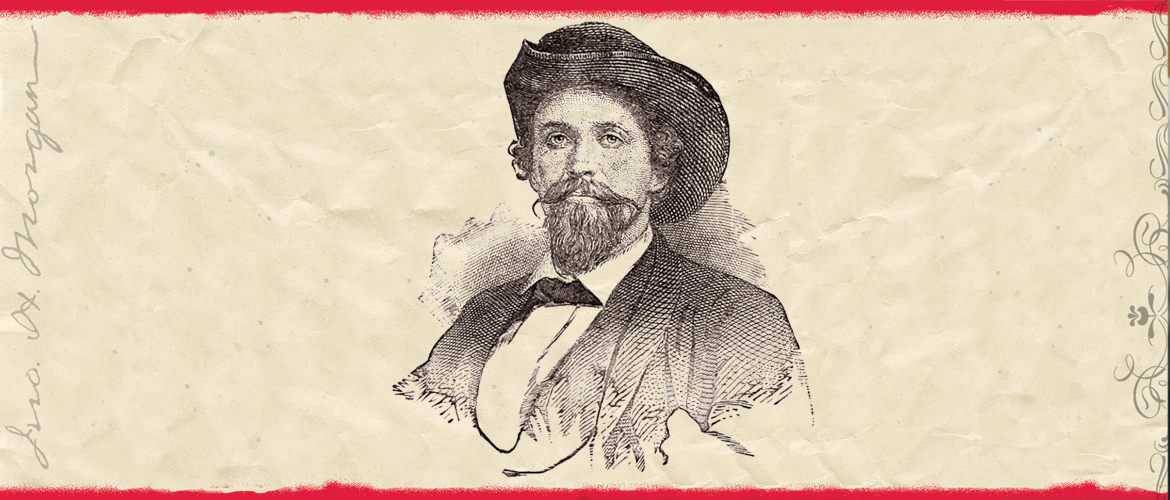
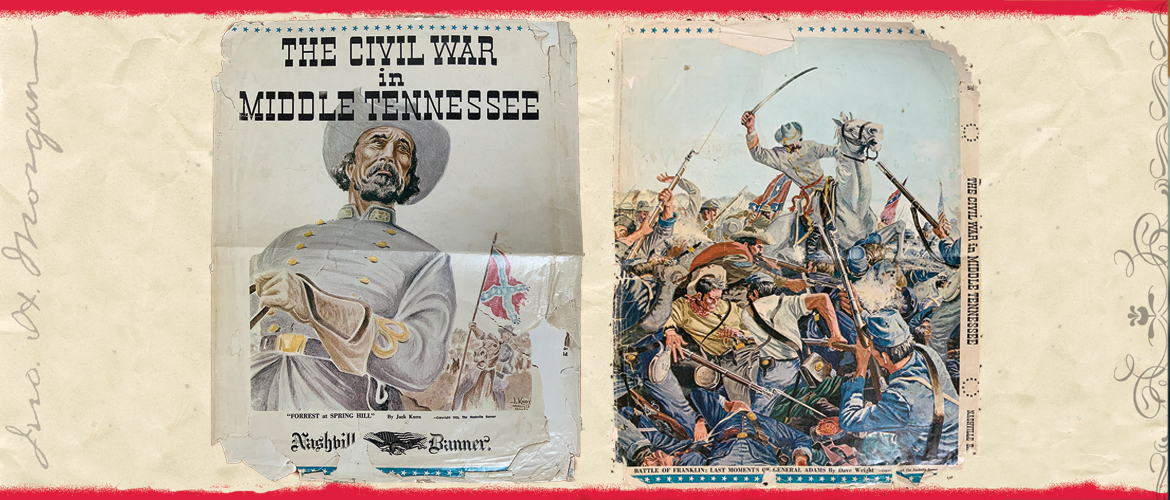
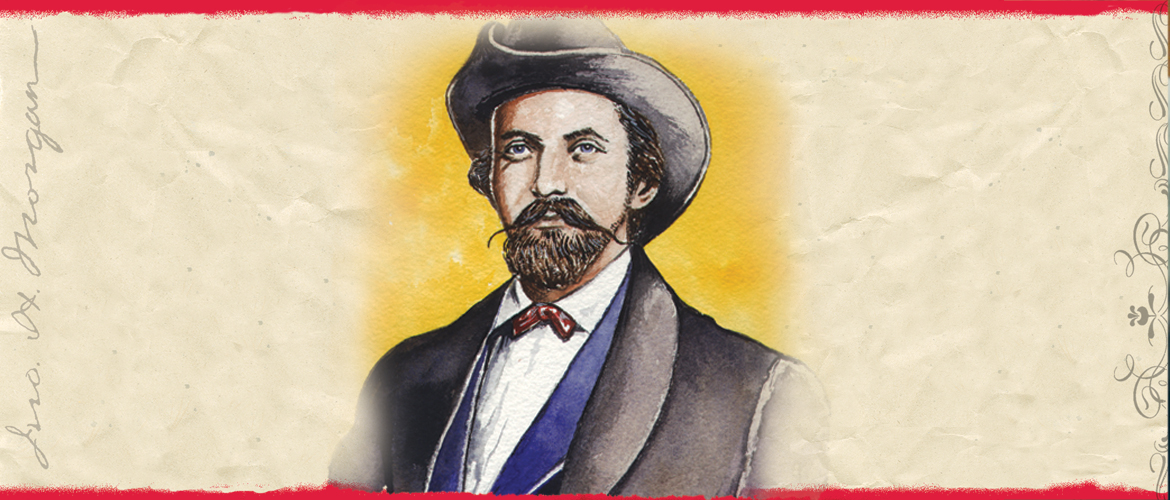
My introduction to John Hunt Morgan came through the pages of a book given to me as a Christmas present by my Uncle Ray when I was thirteen. The book, “The Civil War in Middle Tennessee,” was a reprint of a series by Ed Huddleston, originally published as four separate supplements in the Nashville Banner in the early 1960s to commemorate the war’s centennial.
At that time, my grandparents (Mr. and Mrs. M.M. “Bud” Sexton) and my uncle, Ray Sexton, lived in Dover, Tennessee—a little town on the banks of the Cumberland River and the site of the Battle of Fort Donelson in February 1862. The battle proved disastrous for the Confederacy, but it launched the career of the then-obscure and largely unproven Brig. Gen. Ulysses S. Grant. It earned him the nickname “Unconditional Surrender” Grant and a promotion to major general. His victories on the Cumberland and Tennessee Rivers cleared the way for the fall and occupation of Nashville and Middle Tennessee, and eventually led to his successes on the Mississippi River.
Although Uncle Ray, my mother, and their siblings were born in a cabin on the banks of the Tennessee River near the ruins of Fort Henry—which had also fallen to Grant’s army—the family moved to nearby Dover during World War II when Kentucky Lake was created. Uncle Ray later became Dover’s postmaster and eventually its mayor. Along the way, he fished a number of Union and Confederate cannonballs from the Cumberland, some of which ended up in the visitor center at Fort Donelson National Battlefield.
Looking back on the Civil War book Uncle Ray gave me, I realized that with the war’s centennial approaching, Ed Huddleston and the Banner staff must have recognized that many accounts of the conflict in Middle Tennessee were on the verge of fading into obscurity.
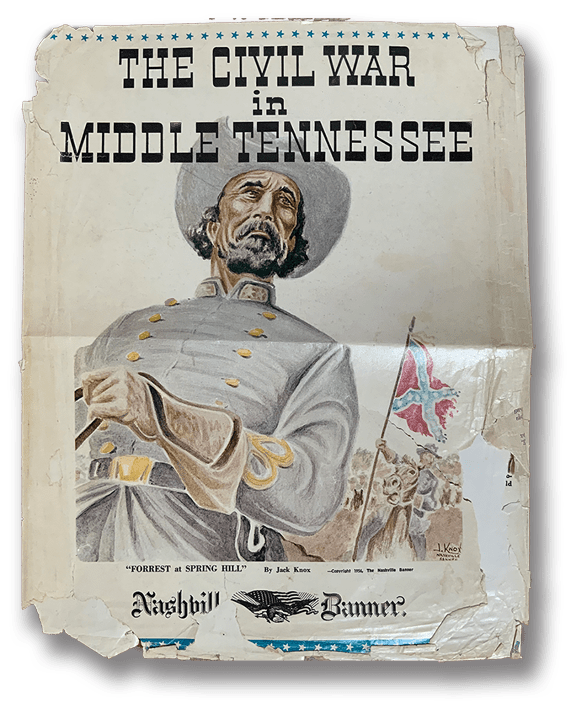
Many of these stories had been passed down as oral histories, told in the early twentieth century by old-timers who had been firsthand observers and participants. Huddleston himself, born in 1909, grew up hearing such stories at the knee of his great-uncle Pleasant (“Plez”) Athaniel Hall, who had served in the Confederate Army. Huddleston’s great-grandfather, Captain Claiborne Wright West, also fought at Shiloh.
Discussions of the war tend to focus on Virginia, Gettysburg, and Georgia, while Middle Tennessee’s battles and battlefields are often overlooked, except among dedicated Civil War enthusiasts. But growing up in Nashville and spending summers in Clarksville and Dover, I was often walking in the forgotten footsteps of the blue and gray. Reading Huddleston’s accounts of what happened in Middle Tennessee ignited my thirteen-year-old imagination. At the top of his stories was John Hunt Morgan and his Raiders, and it sparked a lifelong fascination. Morgan’s lightning raids made him a hero to many civilians on the home front. He became, in my mind, the South’s own comic book hero—seemingly superhuman, often pulling off the impossible. Yet his death in 1864, while attempting another daring escape, must have been a sobering dose of reality for the South—a sign of what was still to come.
Over the years, I wrote numerous history papers on Morgan throughout junior high and high school, often met with puzzled looks from teachers and comments like, “Stick to more well-known generals.” I began to suspect that my fascination was with a relatively obscure figure. As famous and dashing as he had been during the war, by the 1960s he was largely forgotten by the average Middle Tennessean. When Tennessee’s role in the war was mentioned in class, it usually centered on the bloody Battle of Shiloh. Ironically, Morgan and his men were there—and managed to escape.
In 1975, I began turning my fascination with Morgan into songs, starting with “Ride Away.” One song led to another, and eventually an unexpected event reshaped my entire concept of Morgan and music. After spending seven years in New York City—where I continued writing Morgan-themed songs—I moved back south to Atlanta and re-formed what remained of my college band, The Dog & Pony Band. We loved playing in the Asheville and Black Mountain, North Carolina area.
One Sunday morning, after a gig at McDibbs in Black Mountain, the band gathered in Asheville for a late brunch. While flipping through the Sunday paper, I noticed a book review that caught my eye: “Rebel Raider: The Life of General John Hunt Morgan” by James A. Ramage. The review was favorable and, more importantly, treated Morgan as a well-known figure rather than an obscure one. It also highlighted his shifting focus from his men to his war bride, Mattie Ready. I tore out the review and made a mental note to find the book—and possibly the author.
Then came Ken Burns’s outstanding 1990 documentary, “The Civil War,” which sparked renewed interest in the war. Around that time, I began receiving encouragement from friends—like fellow band member Michael Thornburgh and Nashville songwriter Lee Owens—to finally complete my “Lifelong John Hunt Morgan Project.”
I initially recorded all the songs in my bedroom studio, playing all of the instruments and singing all of the vocals, and I first released the album “John Hunt Morgan: A Southern Legend” on cassette in 1993. I began recording on Labor Day 1991 and finished exactly one year later, marking the culmination of a 27-year fascination. The process took me back to that impressionable thirteen-year-old. Years later, I learned that Edwin G. Huddleston— the man whose writings first inspired my interest—had passed away in December 1991, just months after I began recording. It was a sober reminder of the passing of the tradition of oral history, and I felt justified in taking on the project.
Recently, with the numerous advancements of AI in recording, I decided to re-record all of the Morgan songs and re-release the album using other vocalists and musicians for a more polished product and to give the story different “voices.” The result was “Morgan’s War-Song.”
I tracked down a copy of Ramage’s book and, impressed by how vividly he brought Morgan to life, eventually reached out to him. He became a creative sounding board and even helped me access Morgan’s prison love letters to Mattie.
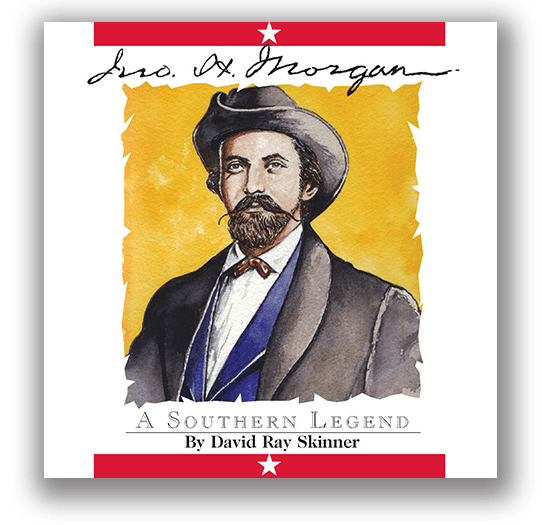
In the 30 years since the release of the initial album, I’ve learned even more about Morgan, his raid, imprisonment, and ultimate legacy. One of the more interesting things I discovered was the fascination Morgan and his men had with Victor Hugo’s “Les Misérables.” The book was first published in 1862, the year before Morgan and his men were captured and imprisoned following their famous Ohio raid. Somehow, a copy of the book found its way into the prison, resulting in more than a few “literary discussions.” Consequently, I decided to write a new song, “Less Miserable,” to add to the collection.
When I started explaining my Morgan concept album to others, I encountered the same old question: “John Hunt who?” But over time, I came to realize that his obscurity was central to the project’s purpose. Morgan had once been one of the most celebrated and beloved generals of his time—and yet, more than 160 years later, he has become largely forgotten.
Fame and legacy are relative. Time and history have their own selective ways of building up and tearing down—of remembering and forgetting.